YouTube: The Video Empire Reinvented by AI
YouTube is no longer just a video platform — it has evolved into an AI-powered entertainment ecosystem where watching, searching, creating, shopping, and even learning merge into one seamless experience.
Owned by Google, YouTube remains the undisputed king of global video platforms. But unlike earlier years where YouTube focused mainly on long-form content, the platform now aggressively combines:
AI-assisted discovery
Short-form entertainment
Multi-device continuity
Creator monetization
Real-time live commerce
Gemini-powered contextual intelligence
The result feels less like a “video app” and more like a personalized AI media operating system.
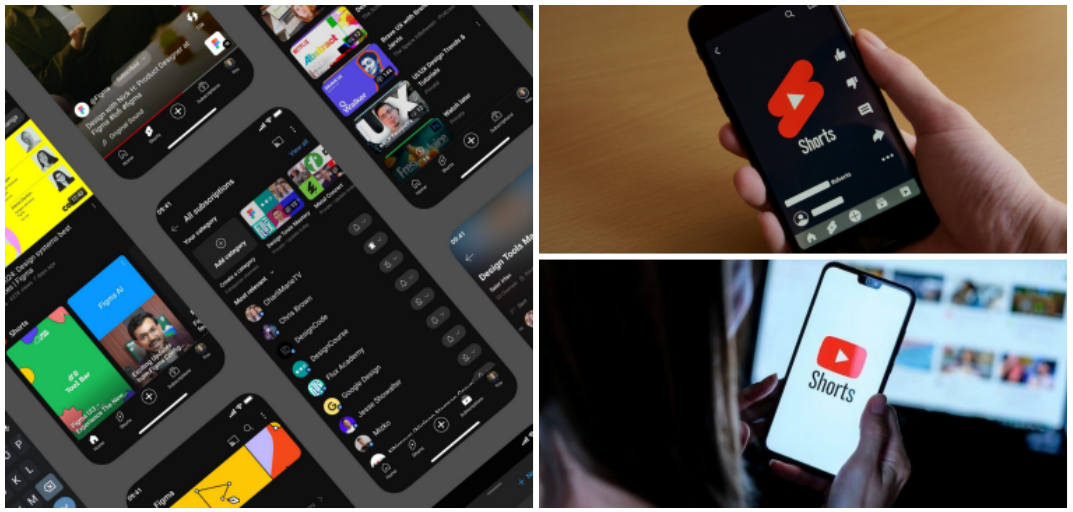
Home Layout: Cleaner, Smarter, More Addictive
The first thing noticeable in the latest YouTube redesign is how aggressively AI now controls recommendation logic.
Instead of simply showing “popular uploads,” the Home page dynamically reshapes itself around:
- Watch duration patterns
- Search intent history
- Time-of-day behavior
- Emotional engagement signals
- Cross-platform activity from Google services
The homepage now feels eerily predictive.
For example:
- Morning sessions prioritize podcasts, news, and productivity clips.
- Night-time scrolling shifts toward entertainment, gaming, and Shorts.
- Search for one tech review, and within minutes your feed transforms into an entire niche ecosystem.
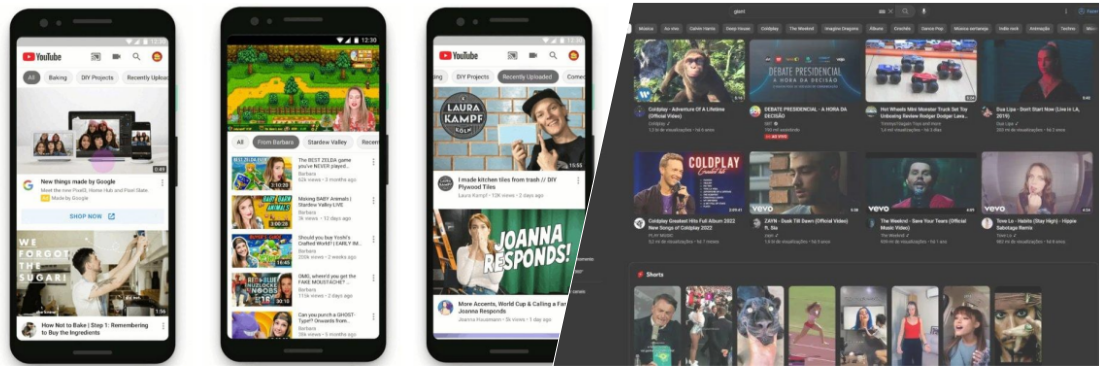
The UI itself is also noticeably calmer:
- Larger thumbnails
- More breathing space
- Reduced visual clutter
- Smoother category tabs
- Faster swipe transitions
Compared to earlier chaotic versions, the 2026 interface finally feels mature.
Player Experience: Small Details, Huge Difference
The video player has quietly become one of the best multimedia experiences on mobile.
Major upgrades include:
- Gesture-based brightness and volume controls
- AI-generated chapter summaries
- Live multilingual subtitle translation
- Smart rewind recommendations
- Context-aware playback speed suggestions
One standout feature is “Ask Gemini About This Video.”
While watching a documentary, tutorial, or podcast, users can ask contextual questions directly inside the player:
- “Summarize this section”
- “What product is being discussed?”
- “Explain this concept simply”
This dramatically reduces the need to leave the app for Google Search.
The mini-player is also significantly smoother now, especially on foldable phones and tablets.
Core Features Stress Test: AI and Multimodal Integration Everywhere
In 2026, nearly every major YouTube interaction is enhanced by AI.
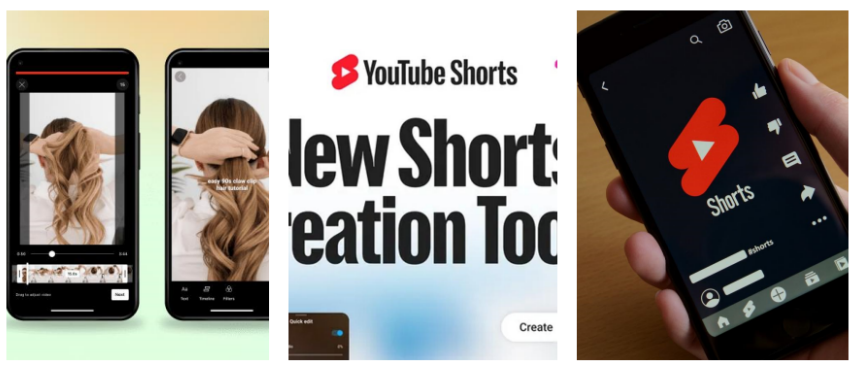
AI Search Is Finally Useful
Search no longer relies purely on keywords.
Users can now type:
- “That video where a guy fixes an iPhone underwater”
- “Relaxing cyberpunk café music with rain”
And YouTube accurately surfaces results through multimodal semantic understanding.
AI Summaries Save Massive Time
Long videos now generate:
- Bullet summaries
- Key moments
- Auto-generated notes
- Timestamp highlights
For educational content, this is transformative.
Voice + Image + Text Search
You can now:
- Hum a song
- Upload a screenshot
- Describe a scene verbally
Live Streaming & the New Creator Economy
Live streaming on YouTube now feels closer to a hybrid of:
- Twitch
- TikTok Live
- Amazon Live
- Discord communities
Features like:
- Real-time AI moderation
- Auto-generated stream highlights
- Instant clip extraction
- Live shopping integration
- Subscriber-only AI chat rooms
Smaller creators especially benefit from AI-powered audience matching, helping niche communities grow faster than before.
The platform now rewards consistency and engagement quality more than raw subscriber count.
The Industry-First “Shorts Addiction Breaker”
One surprisingly bold innovation is YouTube’s “Shorts Strong Break Mechanism.”
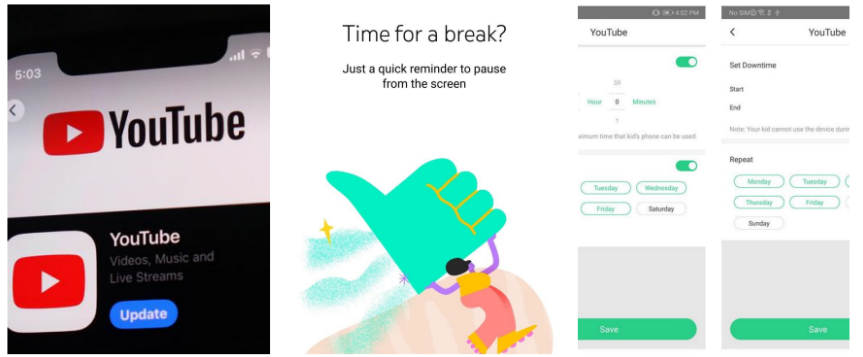
After prolonged Shorts usage, the app may:
- Pause autoplay
- Suggest a break
- Recommend longer educational videos
- Display mindful usage prompts
This is clearly designed to address criticism surrounding doomscrolling and short-video addiction.
Ironically, the feature also improves user trust toward the platform. Whether users actually obey the break reminders is another story.
Ads vs Premium: Is YouTube Premium Finally Worth Paying For?
Ads remain one of the platform’s biggest frustrations.
In 2026, non-Premium users face:
- More aggressive mid-rolls
- Interactive ads
- Longer unskippable formats
- Sponsored Shorts placements
However, YouTube Premium has also become substantially more valuable.
Premium now includes:
- Ad-free viewing
- Background playback
- Offline downloads
- Enhanced AI tools
- Better audio bitrate
- Experimental feature access
For heavy daily users, Premium increasingly feels less optional and more necessary.
Especially for:
- Students
- Podcast listeners
- Commuters
- Long-form content consumers
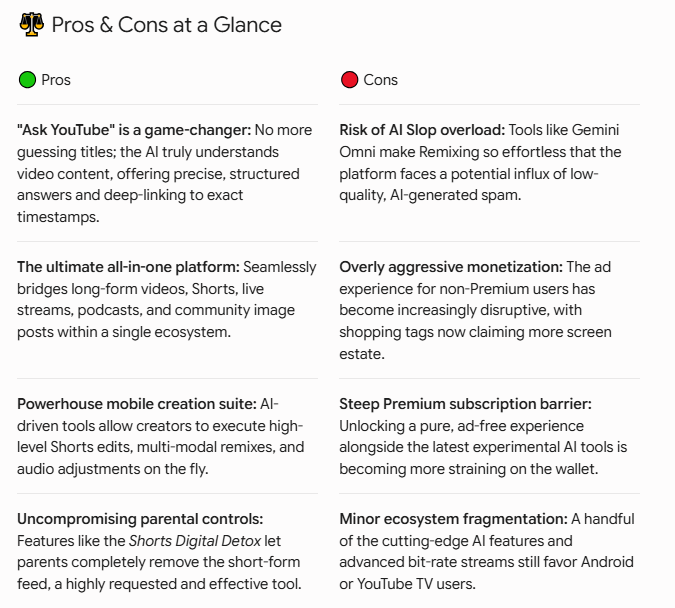
Pros & Cons
Final Verdict & Download Recommendation
YouTube in 2026 feels less like a traditional app and more like the default gateway to internet culture itself.
Whether you are watch tutorials, follow creators, learn skills, consume podcasts, stream live events, or build a content business, YouTube remains nearly impossible to replace. For casual viewers, the free version is still powerful enough. But for anyone spending multiple hours daily on the platform, YouTube Premium now delivers enough convenience and AI-enhanced functionality to genuinely justify the subscription.